Noisy railway engineering works at night near your home: what can you ask for?

Key takeaways
- Construction, maintenance and repair of railway lines count as construction work under the Control of Pollution Act 1974, so councils can control it under sections 60 and 61.
- Network Rail's own best practicable means guidance says night working should be considered a last resort, with mains power preferred to generators and plant shut down when not in use.
- BS 5228-1:2009+A1:2014 gives an example night-time threshold of 45 dB LAeq at homes in quiet areas (Category A), rising to 50 or 55 dB where ambient noise is higher.
- BS 5228-1 also gives example triggers for offering noise insulation or temporary rehousing when high levels last 10 or more days in any 15 consecutive days.
- A barrier's lab Rw rating is not the reduction you get at your window, because sound travels over and around the ends.
If you live near a railway line, you may know the pattern: a letter (or no letter), then a night of floodlights, generators, reversing alarms and the grinding roar of track machines just metres from your bedroom window. Hushtec’s guidance for rail contractors puts ballast tamping and rail grinding at 80–105 dB(A), and much of this work happens at night.
Losing sleep for nights on end is exhausting, especially if you have work, children or a newborn to think about. And it’s easy to feel that because “it’s the railway”, nobody can do anything.
That isn’t the case. Railway works are covered by the same construction noise law as any building site, and there is a lot you can reasonably ask for.
In this article you’ll learn:
- Why railway work happens at night, and whether that’s allowed
- Which laws and standards apply to railway engineering noise
- What night-time noise levels the British Standard treats as significant
- What practical measures you can ask the contractor for
- Who to contact, and in what order
Why does railway work happen at night?
Network Rail says night work usually causes the least disruption to passengers, is safer for workers, and is necessary because it could not maintain its network within daytime hours alone. Most track work needs the line closed, which railway people call a possession: a planned period when a section of line is handed over from train operations to engineering work. Hushtec’s rail guidance notes these windows can be as short as four hours.
So night working on the railway is often unavoidable. But “unavoidable” isn’t the same as “anything goes”. Network Rail’s own best practicable means guidance (NR/GN/ESD25) says noisy work audible at the boundary should be done in normal daytime hours where possible, and that night working should be considered a last resort.
Does construction noise law apply to the railway?
Yes. The Control of Pollution Act 1974 defines works of engineering construction to include “the construction, structural alteration, maintenance or repair of any railway line or siding” (section 73). That brings railway works within the Act’s construction noise powers.
Section 60 notice. Your council can serve a notice on whoever is carrying out the works, specifying the plant or machinery that may or may not be used, the hours of work, and the noise levels allowed. Breaching a notice without reasonable excuse is an offence.
Section 61 prior consent. A Section 61 consent is advance approval a contractor applies for, setting out the works, the methods and the steps it will take to minimise noise. The council has 28 days to decide and can attach conditions. Network Rail’s BPM guidance lists obtaining Section 61 consent as a core step, and says plant on site should be checked against the plant list in the application.
Best practicable means (BPM). BPM is the legal test of whether a contractor is doing what is reasonably practicable to reduce noise, having regard to local conditions and circumstances. It’s defined in section 79(9) of the Environmental Protection Act 1990, and councils must consider it when setting section 60 requirements.
Statutory nuisance. Under section 79(1)(g) of the Environmental Protection Act 1990, noise emitted from premises that is prejudicial to health or a nuisance can be a statutory nuisance. Under section 82, you can complain directly to a magistrates’ court after giving at least three days’ written notice. A Section 61 consent must state that it does not, by itself, give a defence in those proceedings.
Very large schemes, such as HS2, also have project-specific thresholds set in their Environmental Statements, and HS2 Ltd publishes regular noise and vibration monitoring reports. Ask the project team which thresholds apply near you.
What night-time noise level does BS 5228 treat as significant?
BS 5228-1:2009+A1:2014 is the British Standard code of practice for noise control on construction and open sites. Its informative Annex E gives example thresholds for when site noise at homes may have a significant effect. The thresholds depend on how noisy your area normally is: Category A for quieter areas, B and C for progressively noisier ones.
dB LAeq is the average sound level over a period, A-weighted to match how the human ear hears.
| Time period | Category A | Category B | Category C |
|---|---|---|---|
| Night (23:00–07:00) | 45 dB | 50 dB | 55 dB |
| Evenings and weekends | 55 dB | 60 dB | 65 dB |
| Weekday daytime (07:00–19:00) and Saturday (07:00–13:00) | 65 dB | 70 dB | 75 dB |
Source: BS 5228-1:2009+A1:2014, Table E.1. “Evenings and weekends” means 19:00–23:00 weekdays, 13:00–23:00 Saturdays and 07:00–23:00 Sundays. These are examples, not legal limits.
The standard also gives example criteria for offering noise insulation (for example secondary glazing) and, at higher levels, temporary rehousing. Both apply only when high noise lasts for 10 or more days of working in any 15 consecutive days, or more than 40 days in any six consecutive months. In the example table, the night-time insulation trigger is 55 dB LAeq (or 5 dB above the normal pre-works level, if that is higher); rehousing triggers are 10 dB higher. Again, these are not automatic entitlements, but they’re a fair basis for a question if works near you will run for weeks.
What can the contractor actually do about it?
It depends mainly on three things: what the noisy activity is, how close it is to you, and whether the worksite stays put or moves along the line.
Static compounds and generators
Compounds, welfare units and lighting towers often run all night. Network Rail’s guidance prefers mains power over generators. Where generators are needed overnight, it says they should be supersilenced and screened or enclosed, and static plant can be sited in excavated areas below ground level.
Reversing alarms, idling and lighting
These are often the noises that wake people, rather than the main work. Network Rail’s guidance says alarms should be set to the lowest safe output, with broadband or self-adjusting alarms where practicable, and that equipment and vehicles should be shut down when not in use.
Barriers along the works
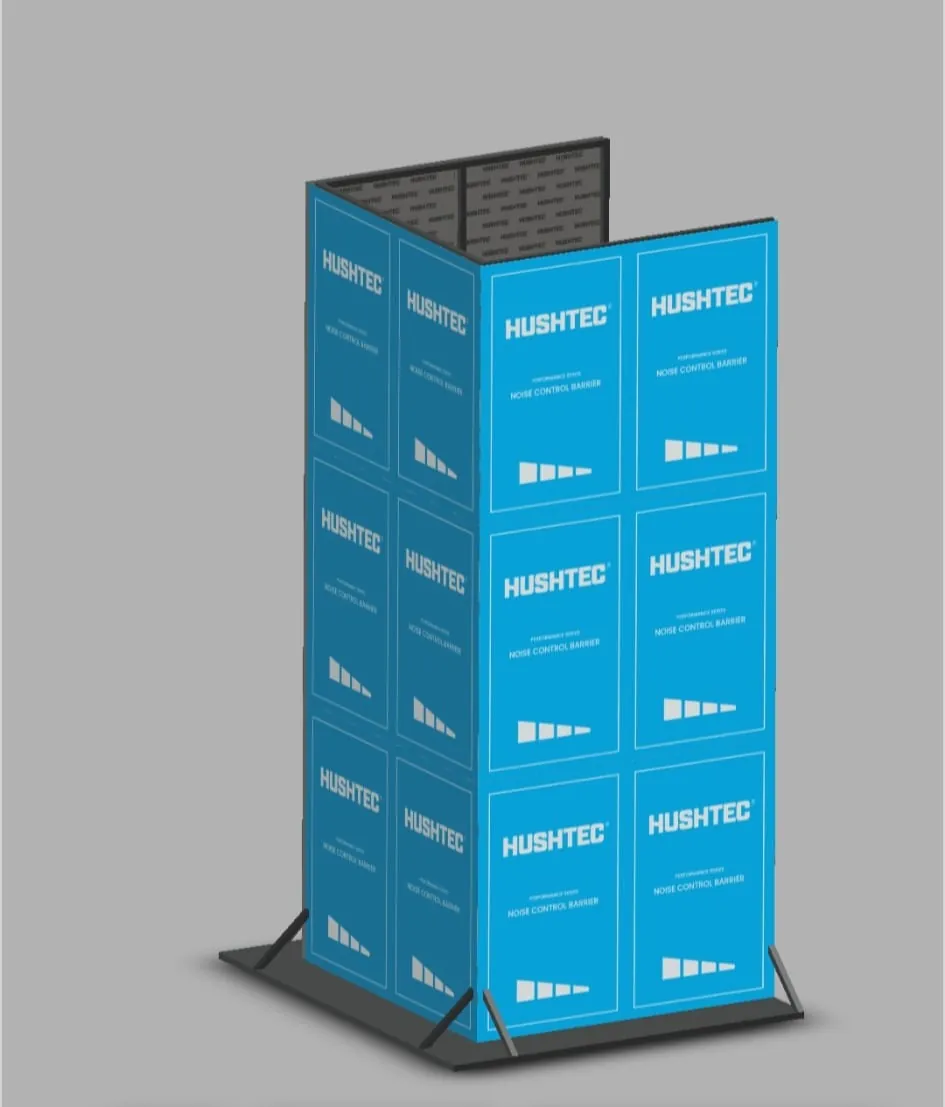
A temporary acoustic barrier is a movable panel wall that blocks the direct path of sound between the work and your home. Network Rail’s guidance says barriers should be imperforate, of suitable mass, have an absorptive lining and extend at least 1 m above the highest sight line.
Commonly used for:
- Static compounds and generator areas
- Breaking-out and cutting work
- Longer jobs in one location, such as bridge or station works
Pros
- Cuts the direct sound path, especially for ground-floor rooms
- An absorptive face reduces sound bouncing back across the line to homes opposite
- Can be moved as the work moves
Cons
- Needs space beside the track, which isn’t always available
- Less effective for upstairs windows that can see over the top
- Harder to use on fast-moving works such as tamping or grinding, which can travel a long way in a night
Two terms help you judge what’s offered. Rw (weighted sound reduction index) is a lab measure of how much sound passes through a barrier panel. Insertion loss is the drop in noise you actually get at a particular point once the barrier is in place. On site, sound goes over the top and round the ends of a barrier, so insertion loss at your window is lower than the lab Rw figure.
What questions should you ask?
| Ask | Why it matters |
|---|---|
| Is there a Section 61 consent for these works? | It shows the agreed hours, plant and noise measures |
| Why does this work need to be at night? | Night work should be a last resort under Network Rail’s own guidance |
| Can generators be swapped for mains power, enclosed or moved? | Overnight generators are a common, fixable cause of complaints |
| Are reversing alarms broadband or set to minimum safe output? | Tonal beeping carries far and wakes people |
| Will barriers be used near homes, and how high? | They should be at least 1 m above the highest sight line |
| Is noise being monitored, and will results be shared? | You can compare levels with consent limits and BS 5228 thresholds |
| Is there a noise insulation policy for long works? | Long, loud works may meet the BS 5228 example criteria |
Where does Hushtec fit in?
This site is supported by Hushtec, a New Zealand manufacturer of temporary acoustic barriers with a UK manufacturing site in Wakefield, West Yorkshire, where its Performance and Premium panels are made.
Hushtec supplies temporary barriers, enclosures and shrouds used on rail and infrastructure work. Its Performance barrier is rated Rw 26 dB and its Premium barrier Rw 32 dB, both with a sound absorption rating of αw 1.0 (Class A to ISO 11654). In one Hushtec case study from Japan, generator noise was reduced from 86 dB to 48 dB. Those are lab ratings and a single case; what you hear depends on distance, layout, barrier height and gaps. Other manufacturers make similar products. What matters to you is that suitable measures are used, and used properly.
Before you act: checklist
- Note the dates, start and finish times and the type of noise (tamping, grinding, generators, alarms, shouting)
- Check whether you received notice of the works and what it said
- Contact the project or the Network Rail Helpline first, with specific times
- Ask Environmental Health whether a Section 61 consent or section 60 notice applies
- Ask about generators, alarms, barriers and monitoring using the questions above
- If works will run for weeks, ask whether noise insulation has been considered
- If nothing changes, take your log to Environmental Health
Where to next
Start a record with our guide to recording noise evidence, follow the step-by-step complaint guide, or estimate levels with the noise calculator. For tunnelling, see what you can do about 24-hour tunnelling noise. If you’re not sure where to start, get assistance, or browse the Learning Centre and FAQ.
This article is general guidance, not legal advice. For your specific situation, contact your council’s Environmental Health team or a qualified adviser.
Frequently asked questions
Why does railway maintenance happen at night?
Network Rail says night work usually causes the least disruption to passengers and is safer for workers, and that it could not maintain its network within daytime hours alone. Track renewal and overhead line work often need the line closed, which is easiest when few trains run. That explains the timing, but it doesn't remove the duty to keep noise as low as is reasonably practicable.
Does the Control of Pollution Act apply to railway works?
Yes. The Act's definition of engineering construction includes the construction, structural alteration, maintenance or repair of any railway line or siding. That means your council can serve a section 60 notice setting machinery, hours and noise levels, and contractors can apply for section 61 prior consent setting out how they will minimise noise. Ask Environmental Health whether a consent exists for works near you.
What noise level is acceptable from night-time railway works?
There is no single legal limit. BS 5228-1:2009+A1:2014, Annex E, gives example thresholds of potential significant effect at homes: 45 dB LAeq at night where the area is normally quiet, 50 dB or 55 dB where existing noise is higher. Large schemes may set their own limits in consents or environmental statements. Your council or the project team can tell you what applies.
Can I get secondary glazing or be moved out during long railway works?
Sometimes. BS 5228-1, Annex E.4, gives example criteria for offering noise insulation, and temporary rehousing where levels are higher still, when high noise lasts 10 or more days of working in any 15 consecutive days, or more than 40 days in six months. These are examples, not automatic entitlements. Ask the project team whether a noise insulation policy applies.
Who do I complain to about noisy railway works?
Start with the project's contact details or the Network Rail Helpline, which Network Rail's guidance names as the preferred first point of contact for queries and complaints. Give dates, times and what you heard. If that doesn't resolve it, contact your council's Environmental Health team, who can check any Section 61 consent and consider a section 60 notice or statutory nuisance action.
Sources
- Hushtec: Rail and Metro Noise Compliance in the UK (original post)
- Hushtec: UK Rail Noise Compliance: HS2's Reset Changed the Timeline, Not the Noise Obligations
- Network Rail: Why we do maintenance and engineering work at night
- Network Rail: Living by the railway
- Network Rail NR/GN/ESD25: Guidance on best practicable means (BPM) for the control of noise and vibration
- BS 5228-1:2009+A1:2014 (copy published by Lincolnshire County Council)
- Control of Pollution Act 1974, section 60
- Control of Pollution Act 1974, section 61
- Control of Pollution Act 1974, section 73 (interpretation)
- Environmental Protection Act 1990, section 79
- Environmental Protection Act 1990, section 82
Supported by Hushtec, a New Zealand manufacturer of temporary acoustic barriers with a UK manufacturing site in Wakefield, West Yorkshire, where its Performance and Premium panels are made. How this site is funded.
Related reading
What is sound absorption and how is it measured?
Sound absorption is how much sound a surface soaks up instead of reflecting back. It is given as a coefficient from 0 (everything reflected) to 1 (everything absorbed), measured in a…
Read →Can a noisy machine on a building site be made quieter, and what can you ask for?
Often, yes. Contractors can fit shrouds or enclosures to the noisiest machines, put acoustic barriers around the work area and boundary, and plan noisy work for less sensitive hours.…
Read →How high does an acoustic wall need to be to screen generator and plant noise?
As a rule of thumb, an acoustic wall should stand about 1.5 m higher than the top of the noise source. A generator 2.5 m tall therefore needs a wall about 4 m high. This guide explains…
Read →